Shulahara Oil Ingredients
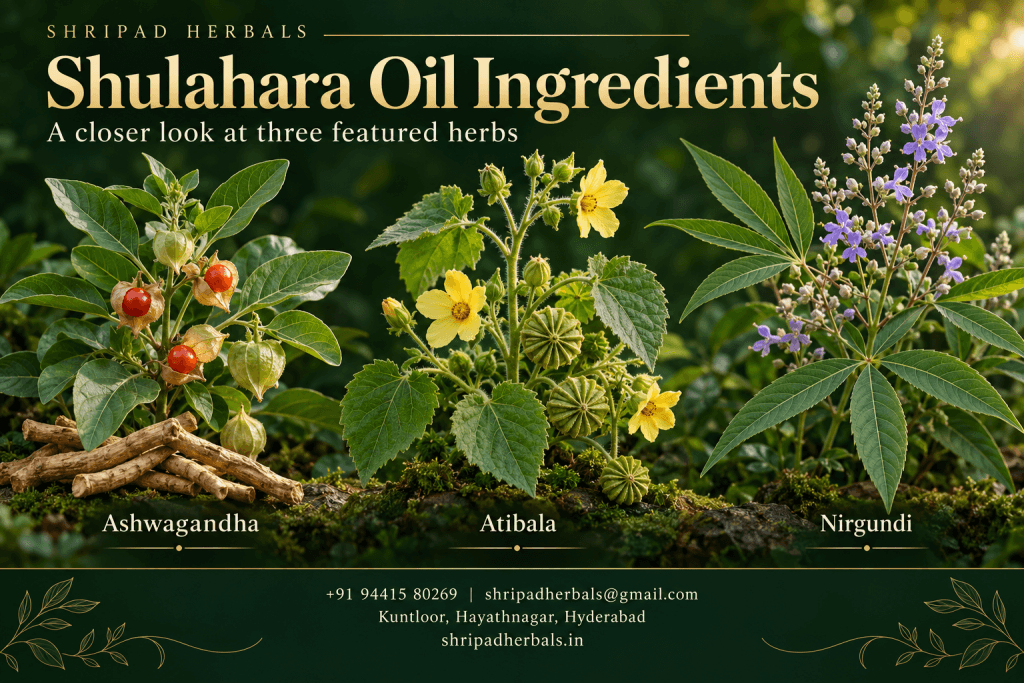
Shulahara Oil Ingredients: Ashwagandha, Atibala and Nirgundi Explained. Ashwagandha, Atibala and Nirgundi are three ingredients listed for Shulahara Herbal Pain Relief Oil. Their botanical names are Withania somnifera, Abutilon indicum and Vitex negundo, respectively. Knowing these names helps you understand the herbs mentioned in product information and distinguish them from similarly named plants.
This guide introduces those three ingredients and explains how to read a herbal oil formulation. It covers selected ingredients, rather than the complete composition of Shulahara.
Three Shulahara ingredients at a glance
| Common name | Botanical name | What to recognise |
|---|---|---|
| Ashwagandha | Withania somnifera | An ingredient name that also appears on many oral herbal products; those products are different from massage oils. |
| Atibala | Abutilon indicum | Sometimes written as Athibala; the botanical name helps clarify the intended plant. |
| Nirgundi | Vitex negundo | A medicinal plant identified under this name in Indian medicinal-plant resources. |
The State Medicinal Plants Board, Uttarakhand lists the botanical identities of Atibala and Nirgundi. The NCCIH Ashwagandha fact sheet identifies Ashwagandha as Withania somnifera.
Ashwagandha: recognise the preparation as well as the herb
Ashwagandha is an evergreen shrub with a long history in Ayurvedic medicine. You may encounter its name on capsules, powders, extracts and topical products. The shared plant name does not make these preparations equivalent.
NCCIH notes that studies of Ashwagandha have used different preparations and that many trials have been small. For a reader researching a massage oil, the useful question is therefore not simply whether Ashwagandha has been studied, but whether the research concerns the same preparation and application.
For example, findings about an oral supplement should not be presented as proof that an oil containing Ashwagandha improves sleep, energy or muscle strength. Shulahara’s ingredient listing identifies the herb; it does not by itself establish those effects.
Atibala: why the botanical name is useful
Atibala is identified botanically as Abutilon indicum. You may see the spelling Athibala in product descriptions. Using the botanical name alongside the common name makes ingredient information easier to interpret.
An ingredient name alone does not tell you which part of the plant was used, how it was prepared or its quantity in the bottle. Those details belong to the manufacturer’s composition information.
When comparing oils, do not assume that two products mentioning Atibala contain the same preparation or amount. A clear label provides more useful information than a long list of general claims about the plant.
Nirgundi: distinguish the ingredient from the finished blend
Nirgundi is identified as Vitex negundo in Indian medicinal-plant resources. It is one of the herbs named in Shulahara’s product information.
A blend listing Nirgundi should not automatically be treated as identical to a standalone Nirgundi preparation. The other ingredients, amounts and manufacturing method may differ.
For the same reason, a result reported for one Nirgundi extract or formulation cannot simply be transferred to every product containing the herb. Look for information relevant to the finished oil when assessing a specific product claim.
What else does a complete oil label tell you?
The three names above are a starting point for understanding Shulahara. For the full formulation, read the composition on the current product pack.
Useful details to look for include:
- The complete ingredient list, including the base oil where stated.
- Botanical names and plant parts, where supplied.
- Ingredient quantities or proportions, if declared.
- Directions for external application and any precautions.
- Manufacturer, batch and expiry information.
If a detail matters to your choice and is not clear, ask the manufacturer rather than inferring it from a picture of herbs. An ingredient illustration is not a substitute for a composition label.
Explore Shulahara Herbal Pain Relief Oil
Visit the Shulahara Herbal Pain Relief Oil product page to explore the product and purchase options.
Shripad Herbals is based in Kuntloor, Hayathnagar, Hyderabad. For questions about the current pack or formulation, call +91 94415 80269 or email shripadherbals@gmail.com.
Frequently asked questions
What are the ingredients in Shulahara oil?
Ashwagandha, Atibala and Nirgundi are among the ingredients listed in Shulahara’s product information. This article covers those three herbs; refer to the current pack for the complete composition.
What is the botanical name of Ashwagandha?
Ashwagandha is Withania somnifera. Its presence in an oil does not make the product equivalent to an oral Ashwagandha supplement.
Are Atibala and Athibala different ingredients?
These spellings are used for the ingredient discussed here as Atibala, Abutilon indicum. Check the botanical identity on the manufacturer’s information if the naming is unclear.
What is Nirgundi’s botanical name?
Nirgundi is Vitex negundo. Botanical names help distinguish plants when common names or spellings vary.
Does this ingredient list prove that the oil treats arthritis?
No. Naming herbs does not establish that a finished product treats a medical condition. Such a claim needs evidence relevant to the product and should match its authorised indications.
This article explains ingredient information; it does not provide individual treatment advice.
References
- NCCIH: Ashwagandha — botanical identity, background and research limitations.
- State Medicinal Plants Board, Uttarakhand: Medicinal plants — Atibala and Nirgundi botanical identities.
These resources provide background information and do not evaluate or endorse Shulahara oil.