Blog

Bakuchi benefits for hair

Bakuchi Benefits for Hair

Bakuchi Benefits for Hair and Scalp Care: Traditional Use and Safety Guide. Bakuchi is a traditional botanical ingredient found in selected Ayurvedic preparations, but discussions of Bakuchi benefits for hair require care. The herb—also commonly called Babchi—is not an everyday kitchen ingredient that should be applied raw or in arbitrary concentrations. Its traditional reputation must be balanced with formulation quality, individual suitability and sensible precautions. In Jatavriddhi Herbal Hair Oil, Bakuchi is included as one part of a multi-herbal formula with Coconut Oil, Bhringraj, Brahmi, Ashwagandha, Amalaki and Japa Pushpa. The finished oil is intended to support a regular scalp-massage and hair-conditioning routine; it should not be portrayed as a guaranteed cure for hair loss, baldness or premature greying. This guide explains Bakuchi’s role in traditional hair care, how it differs from the other Jatavriddhi ingredients, why homemade concentrated preparations are unwise and how to use a finished herbal oil responsibly. What Is Bakuchi? Bakuchi Benefits for Hair, Bakuchi is the Ayurvedic name commonly associated with Psoralea corylifolia, also referred to in botanical literature as Cullen corylifolium. It is also known as Babchi in parts of India. The seeds have a history of use in traditional preparations, including specialised skin applications. That traditional background does not mean raw Bakuchi seed powder or extract is automatically safe for the scalp. The plant is associated with naturally occurring psoralen compounds, which can interact with ultraviolet light. The concentration, extraction method, carrier and directions of the finished formulation therefore matter. Consumers should use an appropriately manufactured product according to its label rather than preparing an unmeasured Bakuchi mixture at home.     What Are the Traditional Bakuchi Benefits for Hair? Bakuchi’s responsible role in hair care is best understood within a complete botanical formulation. 1. Contributes to a Multi-Herbal Ayurvedic Formula – Bakuchi Benefits for Hair Bakuchi adds to the traditional botanical profile of Jatavriddhi Hair Oil. Instead of relying on one fashionable ingredient, the formulation combines several herbs with a Coconut Oil carrier. This multi-herbal approach is central to the product’s identity. It does not mean that every individual ingredient independently delivers every claimed outcome. 2. Complements Scalp Massage A measured amount of herbal oil can be distributed across the scalp with the fingertips. Gentle massage can make oil application more even and create a deliberate self-care routine. The physical massage should remain gentle. Forceful rubbing, scratching or pulling the hair does not increase the benefit of Bakuchi and may irritate the scalp or break fragile strands. 3. Supports a Hair-Conditioning Routine The Coconut Oil base helps lubricate the hair and may improve softness and manageability. Bakuchi forms part of the botanical blend carried within that oil. Better lubrication can reduce friction during handling, which may help limit some dryness-related breakage. This is a realistic cosmetic benefit and should not be confused with treating follicular hair loss. 4. Broadens the Traditional Ingredient Blend Jatavriddhi combines Bakuchi with better-known hair-care herbs such as Bhringraj, Amla, Brahmi and Hibiscus. Each ingredient contributes to the formulation’s traditional positioning, while the finished product—not a single isolated herb—is what the consumer applies. Is Bakuchi Proven to Grow Hair? There is insufficient reliable human evidence to promise that a topical cosmetic oil containing Bakuchi will regrow hair or reverse baldness. Traditional use, laboratory findings and research on isolated compounds cannot automatically establish the performance of a finished consumer hair oil. Hair loss can arise from hereditary factors, hormonal changes, autoimmune disease, scalp infection, nutritional deficiency, illness, medicines, ageing or damaging hair practices. A botanical oil cannot address every cause. People with sudden bald patches, rapid shedding, progressive thinning, scalp pain, sores or persistent inflammation should consult a qualified dermatologist. A timely diagnosis is more useful than repeatedly changing cosmetic products. Bakuchi Hair Oil and Hair Breakage Hair breakage and hair loss are frequently confused. Breakage occurs when an existing strand snaps along its length. Shedding occurs when a strand separates from the follicle as part of a natural or altered cycle. Follicular hair loss can involve hereditary, inflammatory, autoimmune or other medical processes. A suitable oil may help condition dry strands and reduce friction during combing or washing. That can support retention of existing length by limiting avoidable breakage. It does not prove that Bakuchi has created new follicular growth. For a broader explanation, read our Herbal Hair Oil guide. Why Bakuchi Requires Extra Safety Awareness Bakuchi Benefits for Hair, Bakuchi deserves more cautious handling than many commonly used botanical hair ingredients because it is associated with psoralen compounds. Psoralens can make skin react abnormally when followed by exposure to ultraviolet A light. Phototoxic reactions can involve redness, burning, blistering and later pigmentation. The risk depends on the substance, concentration, duration of contact, amount of light exposure and individual factors. For an authoritative explanation of plant-derived photosensitivity, see DermNet’s guide to phytophotodermatitis. This does not establish that every correctly formulated product containing Bakuchi will cause a reaction. It explains why consumers should avoid careless DIY use, follow the finished-product label, patch-test and seek advice if any reaction develops. Why Raw Bakuchi DIY Treatments Are Not Recommended Online recipes sometimes advise grinding seeds, preparing concentrated extracts or combining herbs without measured quantities. Such recipes create avoidable uncertainty: The botanical identity may be incorrect. The ingredient strength may vary between batches. The concentration is not standardised. Contamination may occur during preparation or storage. The carrier may not distribute the ingredient safely. Sunlight precautions may be ignored. The mixture may irritate an already sensitive scalp. Users may continue despite burning because they believe discomfort indicates effectiveness. A commercially prepared finished formulation provides declared ingredients, usage directions and traceability that an improvised mixture lacks. Consumers should still verify the label and use the product only as directed. Bakuchi Benefits for Hair are as below Bakuchi Compared With Other Jatavriddhi Ingredients Ingredient Traditional role in the formulation Practical consumer perspective Bakuchi Specialised Ayurvedic botanical ingredient Requires particular attention to label directions, patch testing and photosensitivity precautions Bhringraj Strongly associated with traditional Indian
Bakuchi Benefits for Hair Read More »

Ashwagandha Benefits for Hair

Ashwagandha Benefits for Hair

Ashwagandha Benefits for Hair: Traditional Ayurvedic Hair and Scalp Care. Ashwagandha is widely recognised in Ayurveda, but what are the realistic Ashwagandha benefits for hair when the herb is included in a topical hair oil? In traditional personal care, Ashwagandha may be incorporated with nourishing carrier oils and other botanicals as part of a regular scalp-massage and hair-conditioning routine. It is important to separate this traditional use from exaggerated promises. An Ashwagandha hair oil should not be presented as a guaranteed cure for hair loss or a treatment that can regrow hair in every user. Hair shedding and thinning have many possible causes, while the visible hair fibre also requires protection from dryness, friction, heat and rough handling. Jatavriddhi Herbal Hair Oil by Shripad Herbals combines Ashwagandha with Coconut Oil, Bhringraj, Brahmi, Amalaki, Japa Pushpa and Bakuchi. This article explains why Ashwagandha belongs within that multi-herbal formulation, how the oil can be incorporated into a sensible routine and when professional hair-loss advice is more appropriate. What Is Ashwagandha?  Ashwagandha benefits for hair, Ashwagandha, botanically known as Withania somnifera, is a plant associated with traditional Ayurvedic practice. It is used in different types of preparations, but an ingredient used in a cosmetic hair oil should not be confused with an oral supplement or medicine. This distinction matters because the route of use, formulation, concentration and intended purpose are different. A topical herbal oil is applied externally to support scalp massage, lubrication and hair conditioning. Users should follow the directions on the finished product rather than attempting to copy advice intended for oral Ashwagandha preparations. What Are the Traditional Ashwagandha Benefits for Hair? The most responsible way to understand Ashwagandha in hair care is to look at its place within the complete formulation and routine. 1. Complements a Traditional Ayurvedic Scalp-Care Routine Ashwagandha is one of several botanicals traditionally valued in Ayurveda. When incorporated into a properly manufactured hair oil, it helps create a botanical scalp-care experience rooted in familiar Indian practices. Its presence does not mean the oil will treat every scalp or hair condition. The practical routine also includes applying an appropriate amount, massaging gently, cleansing carefully and avoiding damaging habits. 2. Supports a Relaxing Scalp-Massage Experience Applying hair oil slowly and massaging with the fingertips can be a calming self-care practice. Gentle massage helps distribute the product across the scalp without the scratching or forceful rubbing that can irritate skin and pull fragile hair. The relaxing experience comes from the complete massage routine; it should not be converted into a claim that topical Ashwagandha treats anxiety, stress disorders or stress-related hair loss. 3. Forms Part of a Multi-Herbal Conditioning Oil In Jatavriddhi, Ashwagandha is not used alone. It is combined with Coconut Oil and other traditional hair-care herbs. The carrier oil helps coat and lubricate the hair, while the botanical blend distinguishes the formulation from a plain single-ingredient oil. Conditioned hair can feel softer, look smoother and become easier to handle. Reduced friction during washing and combing may help limit avoidable dryness-related breakage, although it is not the same as stimulating new hair from the follicle. 4. Encourages Consistent Hair and Scalp Care Results from cosmetic routines usually depend more on consistency and suitability than on using excessive quantities. A measured pre-shampoo application can encourage users to handle their hair deliberately, check the scalp for irritation and follow a regular cleansing routine. Ashwagandha therefore contributes to a broader traditional-care formulation rather than functioning as a stand-alone answer to every hair concern.   Can Ashwagandha Regrow Hair?  There is not enough reliable human evidence to promise that topical Ashwagandha oil will regrow hair or reverse baldness. Laboratory, traditional-use or ingredient-level discussions should not be converted into a guaranteed outcome from a finished cosmetic product. Hair growth occurs within follicles, while visible hair thinning can result from hereditary factors, hormonal changes, illness, nutritional deficiencies, autoimmune conditions, scalp disorders, medicines, ageing and damaging hair practices. These causes require different responses. The American Academy of Dermatology explains that identifying the cause of hair loss is important because many different conditions can produce shedding or thinning. People experiencing sudden, patchy, severe or persistent hair loss should seek assessment from a qualified dermatologist rather than relying only on a cosmetic oil. Suggested authoritative outbound link: American Academy of Dermatology – Hair Loss Overview Hair Growth, Hair Fall and Hair Breakage Are Different These terms are frequently mixed together in product advertising, but they do not describe the same process. Hair Growth New hair growth takes place within an active follicle. A cosmetic oil cannot guarantee that an inactive or medically affected follicle will begin producing hair. Hair Shedding Hair naturally passes through growth and shedding cycles. A noticeable increase in shedding can have many causes and may require professional diagnosis. Hair Breakage Breakage occurs when the existing hair fibre snaps. Dryness, chemical processing, high heat, forceful detangling and friction can make this more likely. Lubrication and gentler handling can help protect the existing hair, making it easier to retain length. This distinction allows people to set realistic expectations from an Ayurvedic herbal hair oil. Why Is Ashwagandha Combined With Other Herbs?  Traditional multi-herbal formulations bring together ingredients with complementary roles rather than depending on a single popular herb. Coconut Oil Coconut Oil serves as the carrier in Jatavriddhi. It helps spread the formulation and lubricate the scalp and hair. The quantity used should suit the person’s hair length, density and cleansing routine. Bhringraj Bhringraj is widely associated with traditional Ayurvedic hair preparations. It forms part of the botanical identity of Jatavriddhi and complements the regular scalp-oiling routine. Brahmi Brahmi is another recognised herb in traditional Indian scalp and hair care. Read more in our guide to Brahmi benefits for hair. Amalaki or Amla Amla is commonly included in oils, shampoos and powders intended for natural hair care. Explore its specific traditional role in Amla benefits for hair. Japa Pushpa or Hibiscus Hibiscus is used in many traditional conditioning preparations. Its inclusion supports the multi-herbal

Ashwagandha Benefits for Hair Read More »

Herbal Hair Oil Ingredients and Benefits

Herbal Hair Oil Ingredients and Benefits

Herbal Hair Oil Ingredients and Benefits: What to Look for Before Buying, understanding herbal hair oil ingredients and benefits can help you select a product that suits your scalp, hair type and daily routine. A well-chosen oil can support lubrication, improve manageability and make dry hair feel better cared for. However, hair oils are not substitutes for medical treatment, and no responsible product should promise guaranteed hair growth or a permanent solution to hair fall. At Shripad Herbal Industries, we believe that informed hair care begins with reading the label, understanding the role of each ingredient and using the product consistently and safely. This guide explains what to examine before buying a herbal hair oil. What Is Herbal Hair Oil? Herbal hair oil is usually a carrier oil infused or formulated with selected herbs traditionally used in hair and scalp care. The carrier distributes the formulation across the scalp and hair, while the herbs give the product its distinctive character. The value of an oil depends on more than the number of ingredients displayed on the front label. The formulation, manufacturing quality, directions for use, packaging and suitability for the individual all matter. A shorter, clearly declared ingredient list can be more useful than an impressive-looking list supported by exaggerated claims. Why Do the Ingredients Matter? Hair and scalp needs vary. One person may be concerned about dryness and tangling, while another may have an oily or sensitive scalp. Some people use oil mainly for pre-shampoo conditioning, while others enjoy a short scalp massage as part of their weekly routine. Knowing the ingredients helps you: Identify the carrier oil and the natural herbs used in the formulation. Avoid ingredients to which you already know you are sensitive. Understand what the product can reasonably contribute to your routine. Compare products without depending on promotional claims alone. Use the oil according to its label and intended purpose.   Common Herbal Hair Oil Ingredients and Their Roles 1. Coconut Oil Coconut oil is widely used as a carrier in Indian hair-care routines. It helps coat and lubricate the hair fibre, which may reduce friction during washing, drying and combing. This can be particularly useful for hair that feels dry, rough or difficult to manage. A published PubMed-indexed study on coconut-based hair oil examined its effect on hair porosity and reported findings suggesting protection against some surfactant-related damage. This research should not be interpreted as proof that every coconut-oil formulation will produce the same result for every person. 2. Bhringraj Bhringraj has a long history of traditional use in Indian hair-care preparations. It is commonly included in oils intended for scalp massage and the care of dull or stressed-looking hair. Its presence does not by itself guarantee new hair growth, but it can form part of a regular, well-balanced grooming routine. Readers who want to explore this ingredient in greater detail can also refer to our article on Bhringraj benefits for hair. 3. Brahmi Brahmi is another herb frequently found in traditional scalp and hair formulations. It is often selected for relaxing oil-massage routines and for conditioning care. Since botanical ingredients can affect people differently, first-time users should still perform a patch test. For more information, read our detailed guide to Brahmi benefits for hair. 4. Amalaki or Amla Amla is a familiar ingredient in Indian hair care. It is used in many oils, cleansers and conditioning preparations designed to support the appearance and manageability of hair. The practical result depends on the complete formulation, frequency of use and the condition of the hair. Our separate article on Amla benefits for hair explains how it can be included in a sensible routine. 5. Japa Pushpa or Hibiscus Hibiscus, traditionally known as Japa Pushpa, is included in many botanical hair preparations. It is commonly associated with conditioning routines for hair that appears dry or lacks softness. While traditional use can guide ingredient selection, it should not be presented as a guaranteed treatment for a medical condition. You may also read Hibiscus benefits for hair for practical usage suggestions and precautions. 6. Ashwagandha Ashwagandha is widely recognised as a traditional herb and is used in selected personal-care formulations. In a hair oil, it should be considered as one part of the complete blend rather than a standalone solution for hair loss. Sudden or significant shedding requires professional assessment instead of self-treatment with cosmetic products. 7. Bakuchi Bakuchi is used in certain traditional botanical preparations. Because some individuals may be sensitive to concentrated botanical ingredients, the product directions should be followed carefully. Perform a patch test, avoid applying the oil to broken or irritated skin, and stop use if redness, burning, itching or discomfort develops. What Benefits Can a Herbal Hair Oil Offer? The realistic benefits of herbal hair oil relate mainly to grooming, conditioning and routine scalp care. Depending on its formulation and how it is used, an oil may: Lubricate the hair and reduce friction during handling. Make dry or rough hair feel softer and more manageable. Support a relaxing scalp-massage routine. Provide pre-shampoo conditioning. Help reduce the dry feeling caused by frequent cleansing or environmental exposure. Encourage consistent attention to scalp and hair care. These are supportive cosmetic benefits. Hair growth and hair fall are influenced by many factors, including genetics, nutrition, hormones, illness, medication, stress, scalp conditions and styling practices. Read our guide to herbal hair oil for hair fall for a more detailed and responsible explanation. What Should You Check Before Buying? Read the Complete Ingredient List Do not rely only on the herbs pictured on the package. Check the actual ingredient declaration and identify the carrier oil, botanical ingredients, fragrance or other components. If you have known allergies, consult an appropriate healthcare professional before use. Look for Clear Manufacturer Information The label or product page should clearly identify the manufacturer or marketer and provide contact details. Transparent business information gives customers a way to ask questions or report a concern. Check Batch and Date Information Look for the batch number,

Herbal Hair Oil Ingredients and Benefits Read More »

Herbal Hair Oil for Dry Hair

Herbal Hair Oil for Dry Hair

Herbal Hair Oil for Dry and Damaged Hair: Benefits and Usage Guide. Dry hair can feel rough, look dull and become difficult to detangle. Heat styling, chemical services, frequent washing, harsh handling and environmental exposure can make the problem more noticeable. A suitable herbal hair oil for dry hair can support lubrication, softness and pre-shampoo conditioning, helping the strands become easier to manage. Hair oil cannot permanently repair a fibre that is already structurally damaged, and it does not treat every cause of breakage or hair loss. Its realistic value lies in coating the hair, reducing friction and complementing a gentler routine. This guide explains how to use herbal hair oil responsibly for dry and damaged-looking hair. What Is the Difference Between Dry and Damaged Hair? Dry hair lacks sufficient lubrication and may feel coarse or difficult to comb. It can occur naturally with certain textures or become more noticeable because of climate, cleansing habits and styling. Damaged hair has undergone physical or chemical stress. Common signs can include: Rough texture and reduced shine. Frequent tangling. Split or frayed ends. Short broken hairs of different lengths. Reduced elasticity. Frizz that is difficult to manage. Breakage during combing or styling. Dryness and damage often occur together, but they are not identical. Conditioning can improve feel and manageability, while cutting severely split ends and reducing the source of damage may also be necessary. Why Does Hair Become Dry? Several everyday factors can contribute: Frequent or Harsh Cleansing Washing more often than the scalp and hair require, using a cleanser that does not suit the hair type or rubbing shampoo aggressively through the lengths can increase dryness. Heat Styling Repeated use of blow dryers, straighteners and curling tools at high temperatures can weaken the fibre and make it more brittle. Chemical Services Colouring, bleaching, straightening, perming and relaxing alter the hair. Closely scheduled chemical services can increase cumulative stress. Rough Towel Drying Wet hair is vulnerable to stretching and breakage. Rubbing it vigorously with a rough towel creates unnecessary friction. Aggressive Detangling Pulling a brush or comb through knots can cause snapping. Working gradually from the ends is generally gentler. Sun, Wind and Swimming Outdoor exposure and pool water can leave hair feeling dry. Rinsing after swimming and using appropriate conditioning care can help limit additional stress.     How Can Herbal Hair Oil Help Dry Hair? Improves Lubrication Oil coats the hair surface and can reduce friction between strands. Better lubrication may make detangling and handling more comfortable. Supports Pre-Shampoo Conditioning Applying a measured amount before washing can help prevent the hair from feeling excessively stripped after cleansing. This is particularly useful for lengths and ends that are drier than the scalp. Helps Hair Feel Softer An oil can temporarily improve softness and shine by smoothing the surface. This is a cosmetic benefit; it does not mean that damaged fibre has biologically healed. Supports Length Retention When dry hair is easier to handle, there may be less avoidable snapping during washing and combing. Reduced breakage can help retain existing length over time. Complements a Gentle Routine Oiling can encourage deliberate scalp and hair care. The benefit depends on combining the product with suitable shampooing, conditioning, detangling and heat-control practices. What Hair Oil Cannot Do A cosmetic oil cannot: Permanently join split ends. Reverse severe chemical damage. Restore destroyed hair follicles. Guarantee new hair growth. Treat scalp infection or inflammation. Correct nutritional, hormonal or thyroid-related hair loss. Produce identical results for every hair type. Trimming damaged ends, reducing the source of stress and selecting a complete routine are often more useful than increasing the quantity of oil. Dermatologists’ Advice for Preventing Further Damage The American Academy of Dermatology’s guide to hair-care habits that can damage hair recommends gently massaging shampoo into the scalp rather than rubbing it through the lengths, using conditioner after shampoo, absorbing water without rough towel rubbing, limiting heat and detangling gently. These steps work alongside oiling. Oil alone cannot compensate for daily high heat, tight hairstyles or forceful handling. Ingredients in Jatavriddhi Herbal Hair Oil Jatavriddhi Herbal Hair Oil contains Coconut Oil with Bhringraj, Brahmi, Ashwagandha, Amalaki, Japa Pushpa and Bakuchi. Coconut Oil Coconut Oil serves as the carrier and helps lubricate the hair. It can be useful in a pre-wash routine for dry lengths, depending on individual suitability and the amount applied. Bhringraj and Brahmi Bhringraj and Brahmi are traditionally used in Indian scalp and hair preparations. In a cosmetic oil, they contribute to a regular conditioning and massage routine rather than acting as guaranteed treatments for damaged hair. Amalaki and Japa Pushpa Amalaki, commonly called Amla, and Japa Pushpa, commonly called Hibiscus, are widely recognised natural herbs in botanical hair care. They form part of the overall Jatavriddhi formulation. Ashwagandha and Bakuchi Ashwagandha and Bakuchi complete the declared botanical blend. Individual sensitivity is possible, so users should read the current label, patch test and stop use if discomfort develops. Learn more about the complete formulation in our guide to herbal hair oil ingredients and benefits. How to Use Herbal Hair Oil  Step 1: Check the Scalp Do not apply oil over broken skin, active sores, severe scaling or an inflamed scalp. Seek professional advice when symptoms are persistent. Step 2: Perform a Patch Test Apply a small amount to a limited area before broader use. Observe the area and discontinue use if irritation occurs. Step 3: Begin With a Moderate Amount Fine or short hair may need much less product than thick, long or curly hair. Start conservatively and add only if required. Step 4: Concentrate on Dry Areas If the scalp is oily but the lengths are dry, concentrate more of the application on the mid-lengths and ends, subject to the label directions. Step 5: Massage Gently If applying to the scalp, use the pads of the fingertips. Do not scratch with the nails or massage forcefully. Step 6: Follow the Contact-Time Directions Longer application is not automatically better. Use the contact time given on

Herbal Hair Oil for Dry Hair Read More »

Best Herbal Hair Oil

Best Herbal Hair Oil in Hyderabad

Best Herbal Hair Oil in Hyderabad. How to Choose the Best Herbal Hair Oil for Your Hair Type.The best herbal hair oil is not necessarily the product with the longest ingredient list or the strongest advertising claim. It is the oil that suits your hair texture, scalp condition, lifestyle and cleansing routine while providing transparent product information and realistic directions. Fine, straight hair may become weighed down by excessive application, whereas thick, curly or dry hair may need more conditioning. An oily or sensitive scalp also requires a different approach from dry hair lengths. Understanding these differences helps you choose and use a herbal hair oil more confidently. Why One Hair Oil Cannot Be Best for Everyone Hair varies in thickness, texture, curl pattern, porosity, length and previous chemical or heat exposure. Scalp conditions also vary. Some people wash their hair frequently because of sweat or travel, while others wash less often because their hair is dry or textured. The American Academy of Dermatology recommends learning your hair type and choosing products and routines suited to it. Its healthy hair-care guidance also advises washing according to how quickly the hair becomes dirty or oily and handling wet hair gently. This means that “best” should be treated as an individual suitability question—not a universal ranking. Start by Identifying Your Hair and Scalp Needs Before comparing oils, ask: Does my scalp become oily quickly? Do my hair lengths feel dry, rough or tangled? Is my hair fine, thick, straight, wavy or curly? Is it coloured, straightened or frequently heat-styled? How often do I shampoo? Do I experience sensitivity to fragrances or botanical ingredients? Am I dealing with fibre breakage or shedding from the root?     These answers determine how much oil to use, where to apply it and how often it may fit into the routine. Choosing Herbal Hair Oil for Fine or Straight Hair Fine or straight hair can look flat or greasy when too much oil is applied. Begin with a small quantity and concentrate mainly on areas that feel dry. If applying to the scalp, distribute a light layer and shampoo according to the product directions. Avoid assuming that a heavy application will improve results. The aim is controlled conditioning without unnecessary buildup. If the hair remains limp after washing, reduce the quantity or frequency. Choosing Herbal Hair Oil for Dry or Coarse Hair Dry or coarse hair often benefits from additional lubrication because the strands may tangle and create more friction during handling. A pre-shampoo oil routine may make the hair feel softer and easier to detangle. Distribute the product through the areas that need conditioning, including the lengths and ends where appropriate. Oil can support softness and manageability, but already damaged hair cannot literally heal itself. Gentle cleansing, conditioning and reduced heat exposure remain important. Choosing Herbal Hair Oil for Curly or Wavy Hair Curly and wavy hair can be prone to dryness and tangling. A measured amount of oil may complement pre-wash conditioning and help reduce friction during detangling. Work in sections if necessary, and avoid brushing dry curls aggressively. Use a wide-tooth comb or fingers according to your normal routine. The amount required will depend on density, length and how easily the hair becomes weighed down. Choosing Herbal Hair Oil for an Oily Scalp Having an oily scalp does not automatically mean oil can never be used, but application should be conservative. A small pre-shampoo quantity may be more comfortable than leaving a heavy layer on for a long period. Regular cleansing is important when sweat, dirt and styling residue accumulate. Stop or reduce use if the scalp becomes increasingly itchy, greasy or uncomfortable. Persistent dandruff, bumps or inflammation should be assessed by an appropriate professional. Choosing Herbal Hair Oil for a Sensitive Scalp Botanical products can cause sensitivity in some individuals. A formulation described as herbal is not automatically suitable for every scalp. Read the complete ingredient declaration. Perform a patch test before regular application. Avoid use on broken or inflamed skin. Follow the stated contact time. Stop if burning, redness, swelling or persistent itching develops. Consult a dermatologist if the reaction continues after stopping. Do not introduce several new products on the same day. If irritation occurs, changing one item at a time makes the cause easier to identify. Ingredients to Examine Before Buying The complete formulation matters more than one popular ingredient. Jatavriddhi Herbal Hair Oil contains Coconut Oil with Bhringraj, Brahmi, Ashwagandha, Amalaki, Japa Pushpa and Bakuchi. Coconut Oil Coconut oil acts as the carrier and helps lubricate the hair fibre. This may support pre-shampoo conditioning and improve manageability, especially when hair feels dry or rough. Bhringraj and Brahmi Bhringraj and Brahmi are traditionally used in Indian scalp and hair-care preparations. Their presence should be considered within the complete cosmetic formulation rather than interpreted as a guaranteed treatment for hair loss. Amalaki and Japa Pushpa Amalaki, commonly known as Amla, and Japa Pushpa, commonly known as Hibiscus, are familiar ingredients in botanical conditioning routines. They contribute to the formulation’s traditional herbal profile. Ashwagandha and Bakuchi Ashwagandha and Bakuchi are additional natural herbs included in Jatavriddhi. As individual sensitivity can occur with botanical ingredients, users should observe the label, patch test and discontinue use if discomfort develops. For a more detailed explanation, read our guide to herbal hair oil ingredients and benefits. Eight Checks Before Selecting a Herbal Hair Oil 1. Complete Ingredient Declaration Look beyond pictures on the front of the package. Confirm the carrier oil and all declared ingredients. Avoid products that do not provide enough information for an informed choice. 2. Manufacturer Identity The label should identify the manufacturer or marketer and provide accessible contact information. This allows customers to ask usage questions or report a product concern. 3. Batch and Date Information Check for batch identification, manufacturing information and a use-before or expiry date. Do not use a package with a damaged seal or missing essential details. 4. Clear Directions A responsible product should explain how

Best Herbal Hair Oil in Hyderabad Read More »

Herbal Hair Oil for Men

Herbal Hair Oil for Men: Benefits, How to Use and What to Expect,Men frequently deal with sweat, dust, helmet use, frequent shampooing and styling products. These factors can leave the hair feeling rough and the scalp uncomfortable. A suitable herbal hair oil for men can support pre-shampoo conditioning, improve manageability and make scalp massage part of a consistent grooming routine. Hair oil should nevertheless be chosen with realistic expectations. It can help condition the hair and reduce friction during handling, but it cannot guarantee new growth or treat every cause of hair loss. This guide explains how men can use herbal hair oil responsibly and when professional assessment is more appropriate. Is Herbal Hair Oil Different for Men? Hair oil does not necessarily need to be labelled “for men” to be suitable for a man. The important considerations are scalp condition, hair texture, lifestyle, ingredient suitability and ease of cleansing. For example, a man with short hair and an oily scalp may prefer a small amount before shampooing. Someone with longer, dry or curly hair may apply a little more to the lengths. A person who wears a helmet for many hours should avoid allowing excessive oil, sweat and dirt to build up on the scalp. The best routine is therefore personal rather than gender-specific. Read the label and adjust the amount and frequency according to how your scalp and hair respond. Practical Herbal Hair Oil Benefits for Men Supports Pre-Shampoo Conditioning Applying oil before washing can coat the hair and reduce the rough feeling associated with frequent cleansing. This can be useful for men who shampoo regularly because of exercise, commuting, outdoor work or perspiration. Improves Manageability Oil can lubricate the hair fibre, making dry or coarse hair easier to comb and style. Gentle handling is important because forceful brushing and combing can contribute to breakage. Complements Scalp Massage A short, gentle massage can help distribute oil across the scalp and create a relaxing grooming ritual. Use the fingertips rather than scratching with the nails. Vigorous rubbing does not improve results and can irritate a sensitive scalp. Helps Hair Feel Softer Hair exposed to sun, air conditioning, hard water or heat styling can feel dry. An appropriate amount of oil may improve softness and reduce friction without the need for excessive application. Encourages a Consistent Routine Regular attention makes it easier to notice changes such as unusual shedding, scaling, redness or patchy hair loss. An oil routine cannot diagnose these changes, but observing the scalp can prompt timely professional advice.     Can Herbal Hair Oil Grow Men’s Hair? No cosmetic hair oil can responsibly promise hair growth for every man. Male hair loss can have several causes. Hereditary male-pattern hair loss commonly appears as a receding hairline or thinning at the crown, while sudden shedding, round bald patches, scalp inflammation, illness, nutritional problems and some medicines can cause different patterns. The American Academy of Dermatology’s guidance on male-pattern hair loss explains that identifying the type of hair loss matters because different conditions need different treatments. Early evaluation can be useful when progressive thinning is noticed. Herbal oil can remain part of a gentle grooming routine, but it should not delay diagnosis or replace treatment recommended by a qualified dermatologist. For a broader explanation, read our article on herbal hair oil for hair fall. Ingredients Men Can Look for in a Hair Oil The entire formulation matters more than one fashionable ingredient. Jatavriddhi Herbal Hair Oil contains Coconut Oil with Bhringraj, Brahmi, Ashwagandha, Amalaki, Japa Pushpa and Bakuchi. Coconut Oil Coconut oil acts as the carrier and helps lubricate the hair. It can be particularly useful as a pre-wash conditioner for hair that feels dry or becomes rough after frequent shampooing. Bhringraj and Brahmi Bhringraj and Brahmi have a long history of traditional use in Indian hair and scalp preparations. In a cosmetic oil, they should be understood as components of the complete conditioning formulation—not as guaranteed treatments for baldness. Amalaki and Japa Pushpa Amalaki, commonly called Amla, and Japa Pushpa, commonly called Hibiscus, are widely recognised botanical hair-care ingredients. They are frequently included in formulations intended to support softness and manageability. Ashwagandha and Bakuchi These traditional botanicals contribute to the identity of the blend. As with any botanical formulation, individual sensitivity is possible. Follow the label, patch test before broader application and discontinue use if irritation develops. Our previous guide to herbal hair oil ingredients and benefits provides a more detailed explanation of the formulation and the checks to make before buying. How Should Men Use Herbal Hair Oil? Step 1: Start With a Patch Test Apply a small amount to a limited area and observe it before regular use. Do not apply the oil to broken, infected or actively inflamed skin. Step 2: Use a Moderate Quantity Short hair usually requires only a small amount. Begin conservatively; additional oil can be added if required. Excess application may make cleansing difficult and leave the scalp feeling heavy. Step 3: Apply to the Scalp and Hair Part the hair where necessary and distribute the oil evenly. If the hair ends are dry, smooth a small quantity along the lengths. Avoid pulling, twisting or rubbing the hair aggressively. Step 4: Massage Gently Use the pads of the fingers for a few minutes. Do not scratch with the nails or assume that forceful massage will stimulate faster growth. Step 5: Follow the Label’s Contact Time Use the product according to its stated directions. Keeping oil on the scalp for an unusually long period is not automatically more beneficial. Men prone to dandruff, folliculitis or scalp irritation should seek individual professional guidance. Step 6: Shampoo Without Harsh Handling Use a suitable shampoo, concentrate cleansing on the scalp and rinse thoroughly. Avoid very hot water. Pat the hair dry rather than rubbing it vigorously with a rough towel. How Often Should Men Oil Their Hair? There is no universal schedule. Once or twice a week may suit many grooming routines, but the

Herbal Hair Oil for Men Read More »

Herbal Hair Oil for Hair Growth

Herbal Hair Oil for Hair Growth

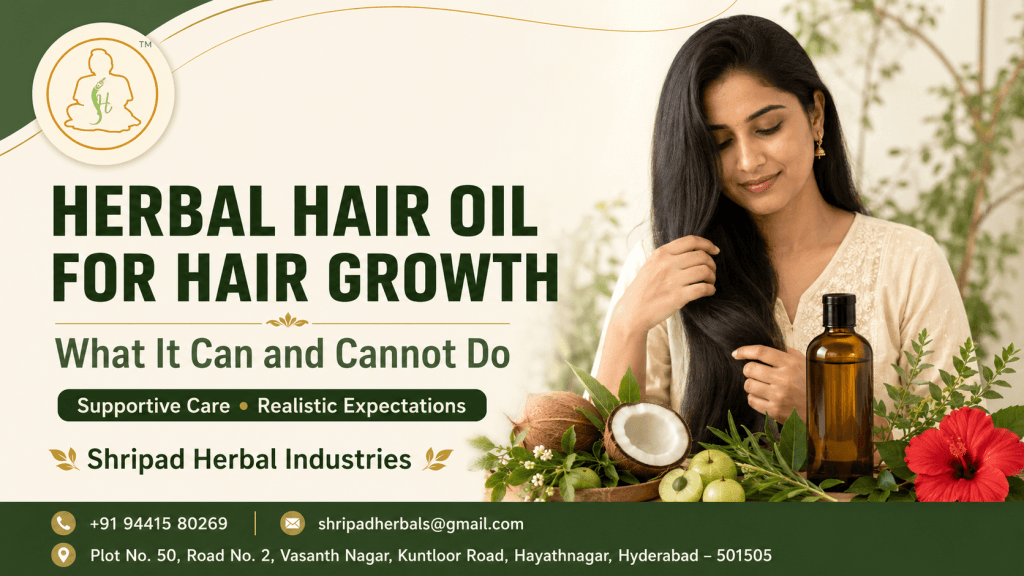
Herbal Hair Oil for Hair Growth: What It Can and Cannot Do. People searching for herbal hair oil for hair growth usually want thicker, stronger-looking hair and less visible shedding. Hair oil can support conditioning, lubrication and gentle handling, but it is important to separate these cosmetic benefits from the medical process of growing new hair. No single oil can guarantee regrowth for every person because hair thinning and hair loss have many possible causes. A responsible routine begins with realistic expectations, suitable ingredients and early professional assessment when the pattern is unusual or progressive. This guide explains what a herbal hair oil can reasonably do, what it cannot do and how to use it without harming an already sensitive scalp. What Does “Hair Growth” Actually Mean? The phrase “hair growth” is often used for several different concerns: New hair emerging from the follicle. Existing hair becoming longer over time. Reduced breakage, allowing the hair to retain length. Improved softness and manageability. Hair appearing fuller because it is better conditioned. Reduced shedding after an underlying temporary trigger resolves. These outcomes are not identical. Hair oil acts mainly on the scalp surface and hair fibre. By lubricating the hair and reducing friction during washing, drying and combing, a suitable oil may help limit avoidable breakage. Retaining more of the existing length can make hair look healthier, but this should not be confused with creating new follicles or treating a medical cause of hair loss. How Herbal Hair Oil Can Support a Hair-Care Routine 1. It Can Condition Dry or Rough Hair Hair that feels dry is more likely to tangle and may be difficult to comb gently. A measured pre-shampoo oil application can coat the strands and make them feel softer. This may help reduce rough handling during cleansing and detangling. 2. It Can Reduce Friction Repeated friction from towels, tight hairstyles, aggressive brushing and everyday handling can contribute to fibre damage. Oil provides lubrication, which can make the hair easier to separate and manage. This is a supportive grooming benefit rather than proof of follicular regrowth. 3. It Can Support Length Retention When hair breaks less frequently, more of its existing length may be retained. People sometimes interpret this as faster growth. The more accurate explanation is that well-conditioned hair may be less likely to snap before reaching a longer length. 4. It Can Complement Gentle Scalp Massage A short massage with the fingertips helps spread the product and can make hair care feel relaxing. Massage should remain gentle. Hard rubbing, scratching with the nails or pulling the hair does not improve growth and may irritate the scalp. 5. It Can Encourage Consistent Observation A regular routine can help a person notice new patches, persistent scaling, unusual shedding or changes in the hairline. Oil cannot diagnose these signs, but noticing them early can encourage an appropriate dermatology consultation. What Herbal Hair Oil Cannot Promise A cosmetic hair oil should not be expected to: Reverse every type of hair loss. Restore follicles destroyed by a scarring condition. Permanently stop hereditary thinning. Correct thyroid, nutritional, hormonal or autoimmune problems. Replace diagnosis or prescribed treatment. Produce the same result for every person. The American Academy of Dermatology’s overview of hair-loss causes explains that hereditary loss, age, illness, stressors, thyroid disease, autoimmune conditions and damaging hair practices are among the possible causes. Because treatment depends on the cause, repeatedly changing oils may delay more useful care.     Hair Breakage and Hair Loss Are Different Understanding the difference can prevent misleading expectations. Hair breakage occurs when the visible fibre snaps. Broken hairs may appear in different lengths, and the ends can feel rough or split. Heat, chemical processing, harsh detangling and dryness can contribute. Hair loss or shedding usually involves hair releasing from the follicle. It may appear as gradual thinning, increased hair in the shower, a widening part, a receding hairline or defined bald patches. An oil can improve lubrication and manageability, which may help with some forms of mechanical breakage. It cannot determine why hair is shedding from the root. Read our detailed guide on herbal hair oil for hair fall for a closer look at responsible care. Ingredients in Jatavriddhi Herbal Hair Oil Jatavriddhi Herbal Hair Oil combines Coconut Oil with Bhringraj, Brahmi, Ashwagandha, Amalaki, Japa Pushpa and Bakuchi. Coconut Oil Coconut oil serves as the carrier and helps lubricate the hair. This can support pre-wash conditioning and make dry strands easier to handle. The quantity should be adjusted to the person’s hair length, texture and scalp oiliness. Bhringraj Bhringraj has a long history of use in traditional Indian hair preparations. In a cosmetic formulation, it is best viewed as part of a regular scalp and conditioning routine, not as a guaranteed solution for baldness. Brahmi Brahmi is commonly included in botanical oils used for scalp massage. Individual response can vary, and first-time users should perform a patch test before broader application. Amalaki Amalaki, also known as Amla, is familiar in Indian hair-care traditions. It is used in products intended to support the appearance, feel and manageability of hair. Japa Pushpa Japa Pushpa, commonly known as Hibiscus, is included in many conditioning preparations. It complements the botanical profile of the formulation without replacing medical care for hair-loss conditions. Ashwagandha and Bakuchi Ashwagandha and Bakuchi are selected natural herbs in the formulation. Botanical ingredients can cause sensitivity in some users. Follow the label carefully, patch test and discontinue use if irritation appears. For more information about each ingredient and how to assess a product label, read Herbal Hair Oil Ingredients and Benefits. How to Use Herbal Hair Oil Safely Perform a Patch Test Test a small amount on a limited area before regular use. Do not apply the product to broken, infected or severely irritated skin. Begin With a Small Quantity Use enough to distribute lightly across the scalp and the areas of hair that need conditioning. Excess oil is not evidence of a more effective routine and may be difficult

Herbal Hair Oil for Hair Growth Read More »

Curry Leaves Benefits for Hair

Curry Leaves Benefits for Hair

Curry Leaves Benefits for Hair and How to Use Them.Curry leaves benefits for hair are widely discussed in traditional Indian hair-care practices. Fresh curry leaves, botanically known as Murraya koenigii, have long been used in food and household herbal preparations. They contain naturally occurring plant compounds, including carbazole alkaloids and phenolic compounds. Laboratory research has investigated the antioxidant properties of curry-leaf extracts. However, strong clinical evidence showing that curry leaves alone can regrow hair or permanently stop hair loss remains limited. Curry leaves should therefore be treated as a supportive traditional ingredient rather than a guaranteed treatment for baldness or an underlying medical condition.     Why Are Curry Leaves Used for Hair Care? Curry leaves are commonly infused into coconut oil or combined with other herbal ingredients. The oil base helps condition the scalp and hair, while the leaves provide a familiar botanical addition to the preparation. People use curry-leaf preparations to support: Scalp conditioning Softer-feeling hair Reduced dryness Improved manageability Traditional oil-massage routines Protection from excessive roughness A healthy-looking shine Results vary according to hair type, scalp condition, product formulation and frequency of use. Curry Leaves and Antioxidant Compounds Curry leaves contain plant compounds studied for antioxidant activity in laboratory settings. Antioxidants help limit oxidation, but laboratory findings should not be interpreted as proof that a curry-leaf preparation can reverse human hair loss. Hair and scalp are regularly exposed to sunlight, pollution, heat and grooming stress. A gentle hair-care routine that includes conditioning oils may help reduce dryness and improve the appearance of weathered hair. The most dependable benefit of an oil-based preparation is usually lubrication and conditioning rather than medically proven regrowth. Can Curry Leaves Help Dry Hair? – Curry Leaves Benefits for Hair Dry hair can feel rough, become difficult to detangle and break more easily during combing. Curry leaves are often infused into coconut or another carrier oil. Applying an appropriate amount to the hair can improve lubrication and reduce friction during washing and combing. The carrier oil contributes significantly to this conditioning effect. Curry leaves should not be described as the only active reason for softer hair. People with oily scalps may require a smaller amount and more thorough cleansing. Can Curry Leaves Reduce Hair Breakage? Hair breakage occurs when the hair shaft becomes dry, weathered or damaged through heat, chemicals, friction or rough handling. An oiling routine may help by: Lubricating the hair shaft Reducing friction during combing Improving manageability Supporting gentler detangling Reducing the rough feeling associated with dryness Breakage is different from hair shedding at the root. If hair is falling excessively from the scalp, the cause may involve nutrition, thyroid problems, hormonal changes, stress, medication, illness or hereditary factors. Persistent or sudden hair loss should be evaluated by a qualified medical professional. Do Curry Leaves Prevent Premature Greying? Traditional hair-care systems often associate curry leaves with maintaining natural-looking hair. However, there is insufficient clinical evidence to claim that curry leaves can reliably reverse grey hair. Premature greying can be influenced by: Genetics Age Vitamin or mineral deficiencies Smoking Oxidative stress Certain medical conditions Curry-leaf oil may condition the hair and make it appear healthier, but it should not be promoted as a proven cure for greying. Curry Leaf Oil for Scalp Massage – Curry Leaves Benefits for Hair A curry-leaf oil preparation can be used as part of a gentle scalp-massage routine. Massage may help distribute the oil and create a relaxing self-care experience. Use the fingertips rather than scratching with the nails. Avoid forceful massage when the scalp is inflamed, painful or affected by an active skin condition. How to Use It -Curry Leaves Benefits for Hair Apply a small quantity of suitable oil to the scalp and hair. Massage gently with the fingertips for a few minutes. Distribute a small amount through dry hair lengths. Leave it on according to the product instructions. Wash using a mild shampoo. Rinse thoroughly. More oil does not necessarily produce better results. Excess oil may require repeated shampooing, which can increase dryness in some hair types. Simple Homemade Curry Leaf Hair Oil A basic household preparation can be made using clean, fully dried curry leaves and a suitable carrier oil. Method Wash fresh curry leaves thoroughly. Allow them to dry completely. Add the dry leaves to coconut or another suitable carrier oil. Warm the mixture gently on low heat. Stop heating before the leaves burn. Allow it to cool. Strain into a clean, dry container. Store away from moisture and direct sunlight. Water remaining on the leaves can reduce storage stability. Stop using the preparation if its smell, colour or texture changes unexpectedly. Homemade mixtures do not have the stability testing or controlled formulation of a professionally manufactured product. How Often Can Curry Leaf Oil Be Used? Frequency depends on scalp type, hair texture and washing routine. A practical starting point may be once or twice a week. Reduce the frequency if you experience excessive oiliness, itching, dandruff-like buildup or difficulty cleansing the scalp. People with very dry hair may apply a small amount mainly to the hair lengths. Those with an oily or acne-prone scalp may prefer shorter contact time. Combining Curry Leaves With Other Herbs Traditional hair oils may combine curry leaves with ingredients such as: Bhringraj Amla Brahmi Hibiscus Fenugreek Coconut oil Each ingredient has its own traditional uses. Combining many herbs does not guarantee faster hair growth, and a complex mixture may increase the possibility of irritation in sensitive individuals. Choose products with clearly disclosed ingredients and directions. Precautions Natural ingredients can still cause irritation or allergy. Before using a new curry-leaf preparation: Perform a patch test Avoid applying it to broken or infected skin Stop if burning, redness or swelling develops Keep the product away from the eyes Do not consume a cosmetic preparation Consult a dermatologist for persistent scalp problems Seek professional advice during pregnancy or when managing a medical condition People with severe dandruff, scalp psoriasis, fungal infection, unexplained sores or sudden hair loss

Curry Leaves Benefits for Hair Read More »

Fenugreek Benefits for Hair

Fenugreek Benefits for Hair: Uses, Tips and Precautions

Fenugreek Benefits for Hair: Natural Care for Stronger Hair,Fenugreek, commonly called methi in India, is familiar as a kitchen ingredient, but it also has a long place in traditional hair-care practices. The seeds become soft and slippery after soaking, making them useful in homemade pastes and rinses. Many people explore the fenugreek benefits for hair as part of a gentle routine for conditioning the scalp and improving the manageable feel of dry or rough hair. Fenugreek is also included in selected herbal hair formulations. Shripad Herbals uses fenugreek as one of the botanical ingredients in Jatavriddhi Herbal Shampoo, together with ingredients such as reetha, hibiscus, amla, shikakai, brahmi and bhringraj. Traditional use can be helpful as a guide, but it should not be confused with a guaranteed treatment for hair loss or scalp disease. Hair fall may have nutritional, hormonal, genetic, medical or stress-related causes that require professional assessment.     What Makes Fenugreek Useful in Hair Care? Fenugreek seeds contain plant proteins, fibre, mucilage and naturally occurring compounds. When soaked and ground, the mucilage produces a smooth paste that can coat the hair temporarily. This may make strands feel softer and easier to detangle after rinsing. People commonly use fenugreek in hair care for: Conditioning dry-feeling hair Improving softness and manageability Supporting a clean, comfortable scalp routine Reducing the rough feel associated with tangled hair Adding a traditional botanical ingredient to a hair mask Individual results vary according to hair type, scalp condition, preparation and frequency of use. Fenugreek for Dry and Rough Hair Dry hair often becomes difficult to comb and more vulnerable to breakage during handling. A well-prepared fenugreek paste has a naturally slippery texture that may help condition the hair surface. This does not permanently repair damaged hair. However, gentle conditioning, careful detangling and reduced friction can improve the way hair feels and may limit avoidable mechanical breakage. For best results, avoid combing aggressively when the hair is wet. Use a wide-tooth comb and begin at the ends before moving towards the roots. Does Fenugreek Promote Hair Growth? Fenugreek is often described online as a hair-growth remedy, but such claims should be treated carefully. A cosmetic ingredient may help condition the scalp and hair without correcting the underlying cause of hair loss. Noticeable or persistent hair fall may be associated with: Iron, protein or vitamin deficiencies Thyroid disorders Hormonal changes Hereditary hair loss Recent fever, illness or surgery Significant physical or emotional stress Scalp inflammation or infection Certain medicines Consult a dermatologist or qualified healthcare professional if hair loss is sudden, patchy, painful, accompanied by scalp lesions or continuing for several weeks. Fenugreek and Scalp Care A clean scalp provides a better environment for comfortable hair care. Fenugreek paste is sometimes used as a pre-wash mask because it spreads easily after proper soaking and grinding. However, leaving a thick or poorly ground paste on the scalp can make rinsing difficult. Residue may remain between the strands and cause unnecessary pulling. The paste should therefore be smooth, used in moderation and rinsed thoroughly. Fenugreek is not a substitute for medical treatment of severe dandruff, psoriasis, fungal infection or allergic dermatitis. How to Use Fenugreek for Hair Simple Fenugreek Hair Mask Soak one or two tablespoons of fenugreek seeds overnight. Rinse and grind them into a very smooth paste using clean water. Perform a small patch test before full application. Apply a thin layer to the scalp and hair. Leave it on for approximately 15 to 20 minutes. Rinse thoroughly with lukewarm water. Cleanse gently if residue remains. Avoid leaving the paste on for hours, especially if your scalp is sensitive. Fenugreek Rinse Soaked fenugreek water is sometimes used as a final rinse. Strain it carefully to remove particles, apply briefly and rinse again if the hair feels coated. Stop using it if irritation or excessive dryness occurs. Use a Formulated Herbal Product People who find home preparation inconvenient may prefer a properly manufactured herbal shampoo containing fenugreek and complementary botanical ingredients. Follow the product label regarding quantity, frequency and rinsing. Important Safety Precautions Natural ingredients can still cause irritation or allergy. Before using fenugreek on the scalp: Patch-test a small amount on the inner arm or behind the ear. Wait and watch for redness, itching, swelling or burning. Do not apply to broken, infected or severely inflamed skin. Keep the paste away from the eyes. Use clean utensils and freshly prepared mixtures. Stop immediately if discomfort develops. People with known legume allergies should be especially cautious. Pregnant individuals or anyone undergoing treatment for a medical condition should seek professional advice before using concentrated herbal preparations. For additional guidance, read this official fenugreek usefulness and safety information from NCCIH Build a Balanced Hair-Care Routine One ingredient cannot compensate for harsh daily practices. Fenugreek works best as one optional part of a balanced routine that includes: Gentle cleansing based on scalp type Thorough but careful rinsing Avoiding excessive heat styling Limiting tight hairstyles and rough towel drying Eating a balanced diet with adequate protein and micronutrients Managing stress and sleeping sufficiently Seeking medical evaluation for persistent hair loss Consistency and realistic expectations are more valuable than changing remedies every few days. Jatavriddhi Herbal Hair Care from Shripad Herbals Shripad Herbals manufactures herbal beauty and personal-care products in Hyderabad. Jatavriddhi Herbal Shampoo includes fenugreek with reetha, hibiscus, amla, shikakai, brahmi and bhringraj as part of its botanical formulation. Jatavriddhi Herbal Hair Oil is a complementary product formulated with a different blend of traditional ingredients for routine scalp and hair nourishment. Always read the product label, follow the directions and discontinue use if irritation occurs. Product suitability may differ between individuals. Frequently Asked Questions What are the main fenugreek benefits for hair? Soaked and ground fenugreek can provide a slippery conditioning texture that may make dry or rough hair feel softer and easier to manage. It is also used traditionally in scalp and hair masks. Can I use fenugreek on my hair every day? Fenugreek Benefits for Hair, Daily use

Fenugreek Benefits for Hair: Uses, Tips and Precautions Read More »

Hibiscus Benefits for Hair

Hibiscus Benefits for Hair – Traditional Ayurvedic Care with Japa Pushpa

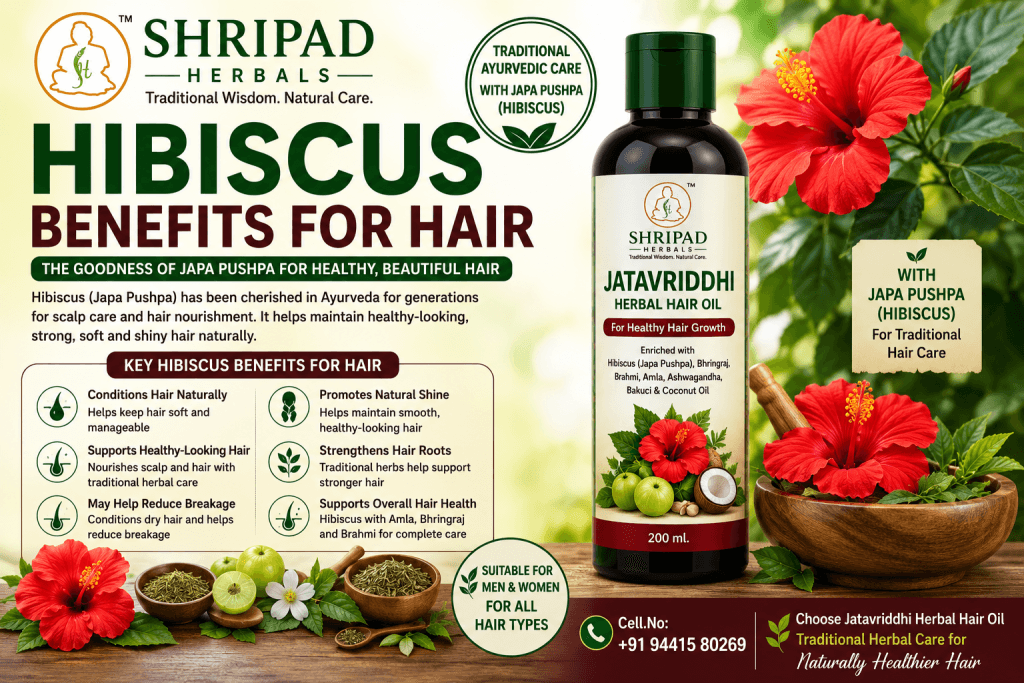
Hibiscus Benefits for Hair – Traditional Ayurvedic Care with Japa Pushpa. Hibiscus is much more than an attractive flowering plant. Known traditionally as Japa Pushpa, Hibiscus has been incorporated into Indian and Ayurvedic hair-care preparations for generations. Its flowers and leaves are commonly used in herbal oils, pastes and other traditional preparations for scalp and hair care. Understanding the Hibiscus benefits for hair can help people looking for a natural approach to maintaining healthy-looking, well-conditioned hair. At Shripad Herbals, Japa Pushpa (Hibiscus),Hibiscus Benefits for Hair is one of the traditional herbal ingredients used in Jatavriddhi Herbal Hair Oil, together with Bhringraj, Brahmi, Amalaki (Amla), Ashwagandha, Bakuci and Coconut Oil.   What Is Hibiscus or Japa Pushpa? Hibiscus (Hibiscus rosa-sinensis) is a flowering plant widely recognised throughout India. In traditional Ayurvedic preparations, it is often referred to as Japa Pushpa. The plant has a long history of traditional use, and its leaves and flowers have been incorporated into different herbal preparations. In hair care, Hibiscus is frequently combined with ingredients such as Amla, Bhringraj and nourishing oils to create herbal formulations intended for regular scalp and hair care.     1. Hibiscus Helps Condition the Hair One of the practical benefits of incorporating herbal oils into a hair-care routine is conditioning. Dry, rough hair may become difficult to manage and more susceptible to breakage. Herbal oil containing Hibiscus can form part of a regular conditioning routine to help maintain softer and healthier-looking hair. When combined with a nourishing oil base such as Coconut Oil, Hibiscus complements a traditional approach to scalp and hair care. 2. Hibiscus Supports Healthy-Looking Hair Hair is regularly exposed to sunlight, pollution, dust, heat styling, frequent washing and various cosmetic products. A consistent hair-care routine can help maintain its appearance and manageability. Hibiscus has traditionally been incorporated into preparations designed for scalp and hair care. This traditional association is one reason Hibiscus for hair continues to be popular in herbal hair-care formulations today. 3. Hibiscus for Hair Growth – What Does Research Say? Hibiscus has attracted scientific interest in addition to its traditional use. An experimental study published in the Journal of Ethnopharmacology evaluated extracts from the leaves and flowers of Hibiscus rosa-sinensis using animal and laboratory models. The researchers reported hair-growth-related activity, with the leaf extract showing greater activity than the flower extract in the experimental conditions. However, this research should not be interpreted as proof that Hibiscus hair oil will cause hair regrowth in humans. More human clinical research would be necessary before making such a claim. For everyday use, Hibiscus is better considered a traditional herbal ingredient that can form part of a regular scalp and hair-care routine. 4. Hibiscus for Hair Fall and Breakage Hair fall can result from many different factors, including genetics, nutritional deficiencies, hormonal changes, illness, stress, scalp conditions and hair-care practices. Hair breakage is different from hair loss occurring at the follicle. Keeping dry hair properly conditioned can help reduce breakage associated with dryness and rough handling. Herbal hair oils containing Hibiscus can therefore be incorporated into a routine designed to maintain conditioned and manageable hair. Persistent, severe or sudden hair loss should be evaluated by an appropriate healthcare professional. 5. Hibiscus for Dry and Dull Hair Healthy-looking hair usually has good texture, manageability and natural shine. Regular oiling can help condition dry hair and improve its overall appearance. Japa Pushpa is traditionally combined with other herbal ingredients in hair oils, making it particularly relevant for people who prefer plant-based ingredients as part of their regular hair-care routine. 6. Hibiscus and Amla for Hair Hibiscus and Amla are two well-known ingredients associated with traditional Indian hair care. Amla (Amalaki) has been widely incorporated into Ayurvedic hair preparations, while Hibiscus (Japa Pushpa) is traditionally used in herbal scalp and hair-care formulations. Rather than treating either ingredient as a miracle solution, combining complementary herbs provides a broader traditional approach to everyday hair care. 7. Hibiscus and Bhringraj for Hair Bhringraj is another prominent herb associated with traditional Ayurvedic hair care. Combining Hibiscus and Bhringraj for hair brings together two ingredients with a long history of traditional use. This multi-herbal philosophy is particularly relevant to Jatavriddhi Herbal Hair Oil, which contains Hibiscus, Bhringraj and several other traditional ingredients rather than relying on only one herb.   Jatavriddhi Herbal Hair Oil with Japa Pushpa – Hibiscus Benefits for Hair   Shripad Herbals brings several traditional herbal ingredients together in Jatavriddhi Herbal Hair Oil. The formulation includes: Japa Pushpa (Hibiscus) – traditionally incorporated into herbal hair-care preparations. Bhringraj – one of the best-known herbs associated with Ayurvedic hair care. Brahmi – traditionally incorporated into scalp and hair-care formulations. Amalaki (Amla) – a widely recognised traditional Indian hair-care ingredient. Ashwagandha – a well-known herb used in Ayurvedic formulations. Bakuci – another traditional herbal ingredient. Coconut Oil – provides a nourishing oil base for the herbal formulation. Together, these ingredients provide a multi-herbal approach for people who prefer traditional herbal ingredients as part of their everyday scalp and hair-care routine. How to Use Herbal Hair Oil with Hibiscus   Apply an appropriate quantity of herbal hair oil according to the product instructions. Gently distribute the oil across the scalp using your fingertips and massage without scratching with the fingernails. Apply the oil through the hair as appropriate and leave it for the recommended period before washing with a suitable mild shampoo. A consistent and gentle hair-care routine is generally preferable to excessive application.   Hibiscus Hair Care in Hyderabad – Shripad Herbals   Consumers interested in traditional hair care may search for terms such as Hibiscus hair oil in Hyderabad, Ayurvedic hair oil in Hyderabad, herbal hair oil in Telangana, and natural herbal hair-care products in India. Shripad Herbals, based in Hayathnagar, Hyderabad, Telangana, offers herbal products inspired by traditional Ayurvedic ingredients. Jatavriddhi Herbal Hair Oil combines Japa Pushpa with Bhringraj, Brahmi, Amla, Ashwagandha and other herbal ingredients for people who prefer a traditional herbal approach to hair and scalp care.   Frequently Asked Questions
Hibiscus Benefits for Hair – Traditional Ayurvedic Care with Japa Pushpa Read More »

Shopping Cart